Access Control Systems Explained: Keypads, Intercoms, and Smart Entry
Access control systems verify credentials to determine who can enter a property through gates or garage doors. Unlike basic motors, they check identity, permissions, and timing before granting access.
Access control systems provide both convenience and security for gates and garages. When well-designed, they allow authorized access and restrict unauthorized entry. This guide explains how these systems work and how to choose the best option for your property.
What Is an Access Control System for Gates and Garages?
An access control system acts as a decision layer. When someone approaches a gate or garage door, the system checks their credential, confirms permission, and signals the operator to open or stay closed.
Credentials can include a code, phone, card, vehicle tag, or license plate. Unlike basic remotes that only open doors, access control systems manage and restrict entry.
For this reason, access control is typically integrated into professional installations rather than added as an accessory.
How Gate and Garage Access Control Systems Work
Despite different technologies, most systems follow the same sequence:
- A credential is presented.
- The controller verifies permission.
- The gate or garage operator is activated.
This process is nearly instantaneous, enabling administrators to manage users, set schedules, revoke access, and review activity as needed.
The Controller: The Decision-Maker
The controller is the system’s central component. It stores authorized users, enforces access rules, and communicates with the gate or garage opener.
In single homes, the controller manages a few users. In HOAs and commercial properties, it may handle hundreds of credentials across multiple entry points. As site complexity increases, the controller’s role becomes more critical.
Common Access Methods Used at Gates and Garages
Keypads
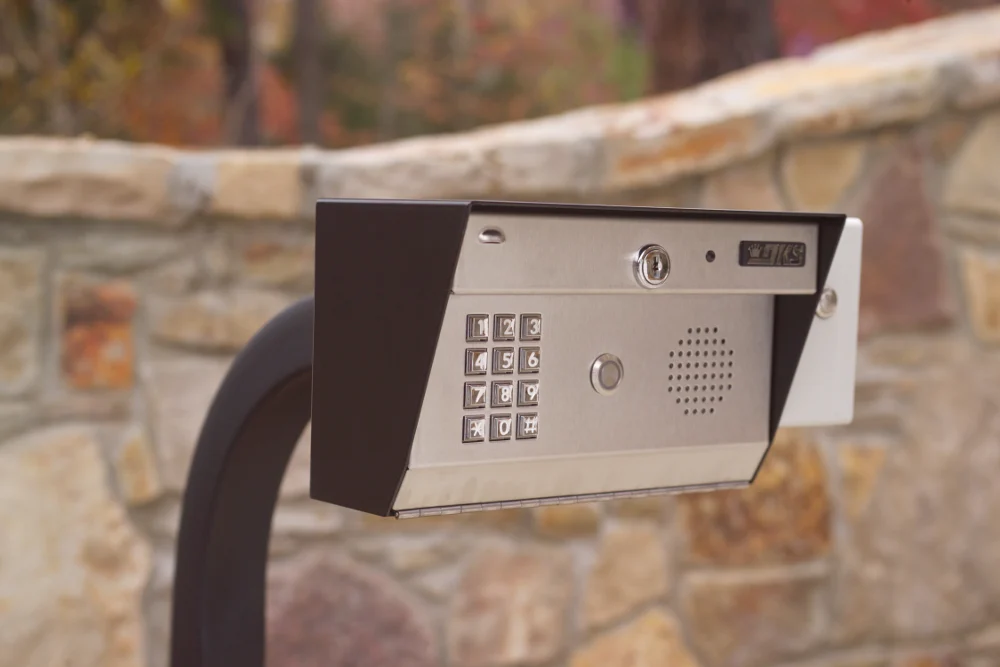
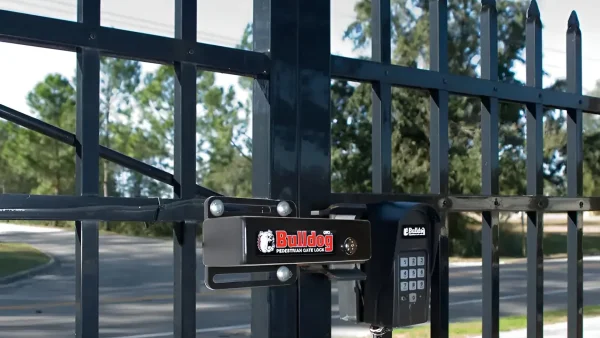
Keypads grant access using PIN codes. They remain popular because they are reliable, easy to use, and do not require smartphones or connectivity.
They work well for:
- Residential driveway gates
- Shared garages
- Vendor or service access
Modern keypads support temporary and scheduled codes to help prevent long-term code sharing.
Intercom and Telephone Entry Systems
Intercom systems add a verification step. Visitors request access, and a resident or staff member approves or denies entry.
Most modern intercoms forward calls to smartphones rather than fixed handsets, making them well-suited for gated communities, apartments, and mixed-use properties with frequent visitors.
Smartphone and App-Based Access
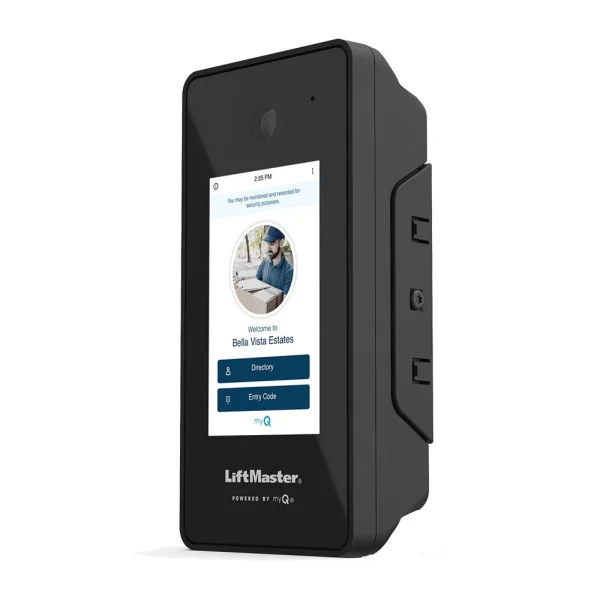
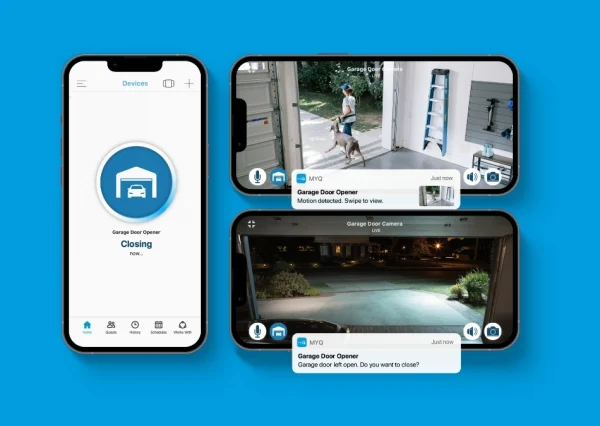
Smart access systems authenticate users through mobile apps using Bluetooth, Wi-Fi, or cellular networks.
They allow:
- Remote opening of gates and garages
- Temporary digital access for guests
- Real-time alerts and access logs
These systems are preferred when flexibility and remote management take priority over physical credentials.
Vehicle-Based Access and License Plate Recognition
Vehicle-based systems streamline entry. Long-range RFID tags or license plate recognition cameras automatically identify approved vehicles and open the gate without driver input.
These systems are common in HOAs, commercial parking facilities, and properties with frequent vehicle traffic, where efficient flow and convenience are essential.
Gates and Garages Are the Enforcers
Access control systems alone do not provide security; they rely on a physical barrier to enforce access decisions.
That barrier may be:
- An automatic sliding or swing gate
- A barrier arm
- A sectional or roll-up garage door
For this reason, access control design is typically coordinated with automatic gate or garage door opener installation, rather than added later.
Which Access Control System Fits Which Property?
This is where most explanations stop short. The right system depends on how the property is used.
- Single-family homes prioritize simplicity, often using keypads or smartphone access.
- Gated communities and HOAs rely on layered systems combining vehicle access for residents and intercoms for visitors.
- Commercial properties prioritize logging, accountability, and controlled access for employees and deliveries.
- Garages focus on monitored entry and controlled access rather than perimeter defense.
Garage-focused systems are often paired with smart garage door solutions for monitoring and automation.
Common Access Control Failure Points (and Why Design Matters)
Most access control failures result from poor planning or neglected maintenance, not faulty technology.
Common issues include:
- Shared or unmanaged credentials
- Moisture or insects inside enclosures
- Wiring degradation
- Power or communication interruptions
Routine access control maintenance helps prevent these issues before they cause lockouts or unsafe bypasses. When failures occur, professional repair restores proper operation without compromising safety.
Gate Access Control vs Garage Access Control
Gate access control systems secure the perimeter and manage vehicle flow. Garage access control systems focus on entry to enclosed spaces, emphasizing monitoring and controlled access.
Both use the same principles, but the risks and priorities are different.
Key Takeaway
Access control systems turn gates and garage doors into effective security tools. They grant access deliberately, adapt to changing users, and provide visibility as needed.
When properly designed and maintained, they deliver security without friction.