
(786) 780-2880
(786) 780-2880
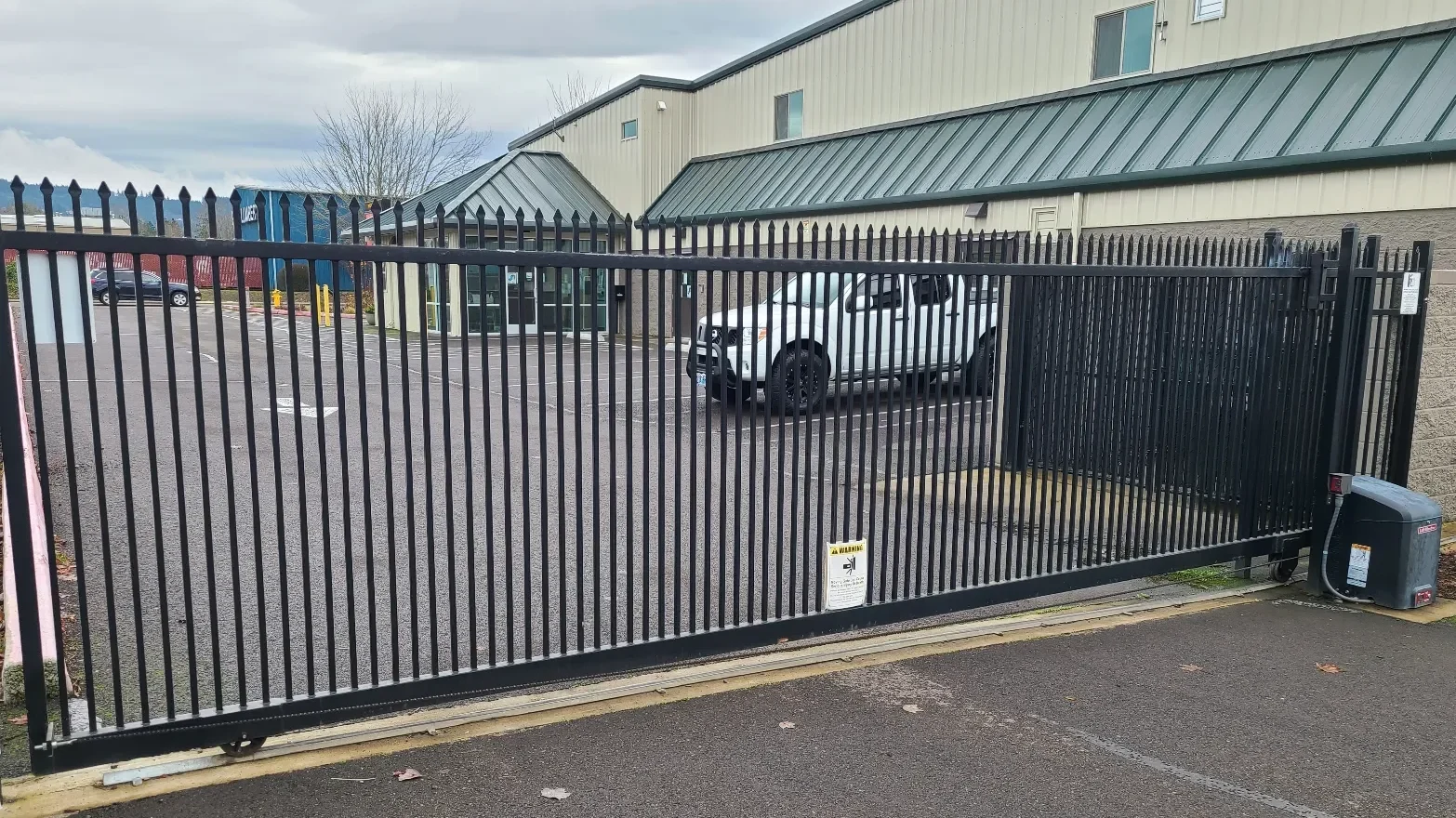
Commercial gates are automated vehicle entry systems installed at businesses, warehouses, parking facilities, and industrial properties. These systems use electric motors and access control devices to manage traffic flow at commercial entrances, reliably operating under heavy daily use and large vehicle loads.
Commercial gate installation involves designing and installing automated gate systems that handle entrances wide enough for large vehicles, open and close frequently, and connect to access control systems that restrict entry for commercial properties.
Common commercial gate types include sliding, swing, cantilever, barrier-arm, vertical lift, and bi-fold security gates. Each is designed for specific traffic volumes, property layouts, and security needs.
Unlike residential systems, commercial gates are built for wider driveways, heavier structures, and frequent use. Installations usually include strong gate frames, heavy-duty operators (motors and mechanisms), safety devices that detect cars or obstacles, and entry control technologies that manage who can access the property.
In Florida, commercial gates must withstand high humidity, coastal salt exposure, and severe weather. Corrosion-resistant materials, sealed electrical components, and backup power systems are essential for reliable operation.
Commercial gate installation is tailored to each property. Vehicle patterns, entrance layouts, and security requirements determine the most suitable gate system.
For example, a distribution warehouse with frequent truck deliveries may need a wide sliding or cantilever gate for continuous operation. An office complex may use swing gates with controlled employee and visitor access.
Designing a commercial gate installation starts with evaluating the property entrance and operational needs. Several factors influence the choice of gate system, operator capacity, and access control equipment.
Key considerations typically include:
Proper evaluation of these factors ensures reliable vehicle access control and efficient traffic flow for employees, visitors, and delivery vehicles.
A well-designed commercial gate improves entrance security, reduces unauthorized access, and helps businesses manage vehicle movement safely on high-traffic properties.


Commercial properties choose commercial gate systems based on site conditions, traffic volume, and security requirements.
Sliding gates move along a track anchored to the ground, or use a cantilever system, in which the gate is supported by rollers at one end and does not touch the ground. These types are popular because they function well under heavy traffic conditions and do not require extra space for swinging open.
They are often installed at warehouse entrances, distribution centers, commercial driveways, and industrial yards that require wide openings and frequent operation.
Swing gates open inward or outward on hinges with one or two gate panels. They are often installed at office complexes, business parks, driveways, and gated communities, provided there is enough room for the panels to open and close safely without hitting objects or vehicles.
Swing gates can be automated with commercial-grade electric motors and linked to systems that grant access, such as keypads or card readers.
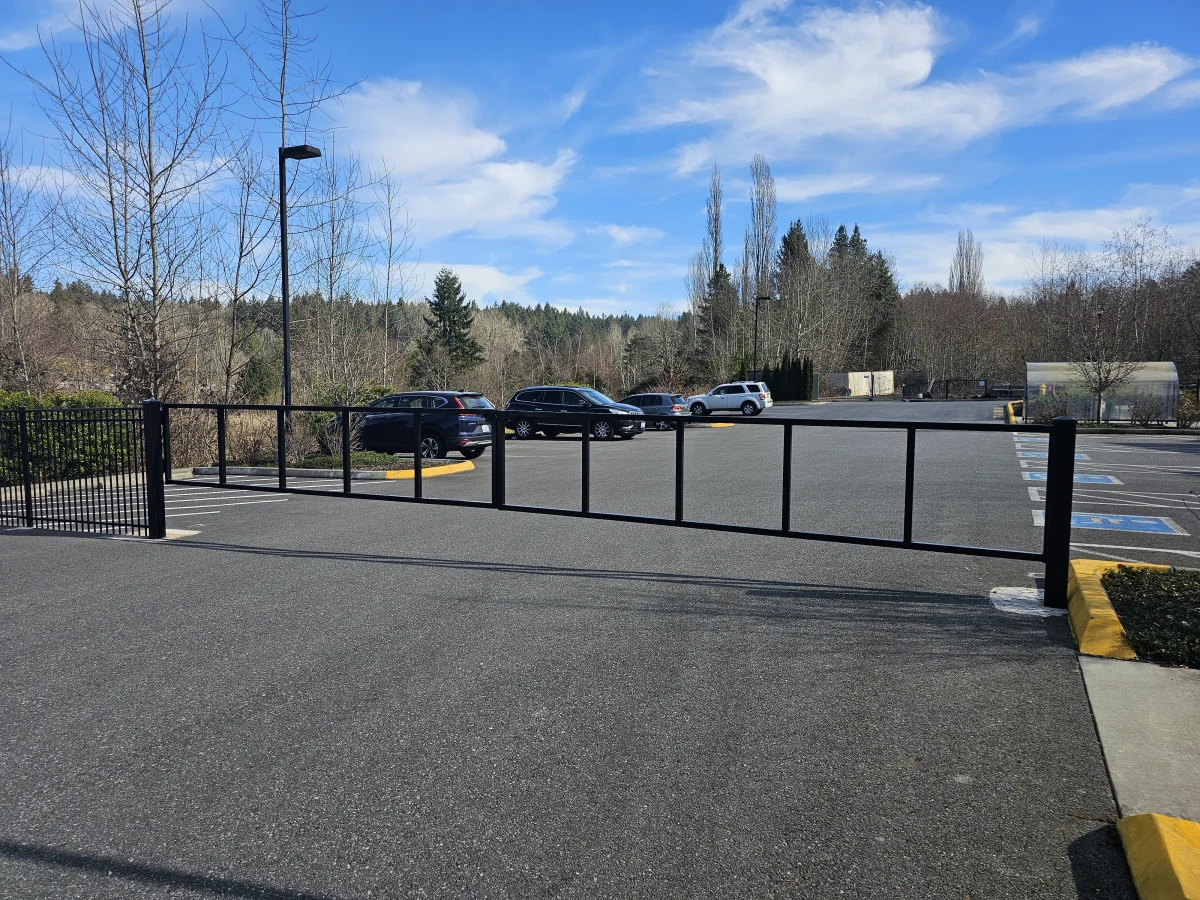
Barrier arm gates have a long, horizontal arm that rises and lowers to allow or block vehicle passage. They are mainly used to direct traffic flow rather than to provide a secure barrier along the property’s entire perimeter.
These systems are widely used in parking lots, garages, apartment complexes, and commercial parking structures to efficiently manage vehicle flow.
Barrier arm gates allow vehicles to pass quickly and can work with systems like ticket dispensers, RFID card readers (which scan radio frequency badges used to identify vehicles), or keypads.
Vertical lift gates move straight up above the entryway instead of opening sideways or swinging. They are chosen for places with limited ground space or where high security is needed.
They are commonly installed at industrial facilities, logistics yards, restricted-access properties, and high-security sites.
Bi-fold gates are made with panels connected by hinges, allowing them to fold together when opening. These gates open quickly and take up less space than traditional swing-out gates.
They are often installed in loading zones, distribution centers, and busy commercial entrances where quick opening improves traffic flow.

Selecting the right commercial gate system for your Florida business depends on several operational factors that directly affect security, traffic flow, and long-term reliability. Choosing the wrong system can lead to frequent breakdowns, security gaps, and costly repairs, making proper evaluation essential before installation.
The following key factors determine which commercial gate system performs best for your property.
Sites with frequent vehicle entry and exit require gate systems built for continuous, all-day use. Sliding and cantilever gates handle wide driveways and frequent operation without quick wear.
Swing gates require open space directly behind the gate panels to open and close properly. When available space is limited, or the entrance design restricts movement, sliding or vertical lift gates are better options, especially in tight spaces or high-traffic areas.
Properties requiring higher security may use extra-strong steel gates, solid-panel gates, or gate systems with advanced electronic access controls, such as RFID readers (which detect special badges), video intercoms (which allow communication and visual identification), or license plate readers (which automatically read license plates).
Commercial gate systems are designed to integrate with a wide range of access control technologies, including keypad entry systems, RFID card and fob readers, remote transmitters, audio and video intercom systems, and license plate recognition cameras, giving property managers full control over who enters and exits.
Large commercial entrances require strong gate frames and heavy-duty operators, electrical motors, and mechanisms designed for frequent use. Making sure the gate is sized correctly means it can handle the width, weight, and frequency of use without failing early.

Commercial gates are available in several configurations, each designed to accommodate specific traffic conditions, entrance layouts, and security requirements. The comparison below summarizes the most common commercial gate systems, their ideal applications, and key operational considerations to help Florida businesses make an informed decision.
| Gate Type | Best For | Key Advantage |
| Sliding gate | Warehouses, industrial yards, wide entrances | Handles heavy traffic and large gate openings |
| Cantilever gate | Uneven ground, gravel driveways, industrial sites | No ground track required |
| Swing gate | Office complexes, business parks | Simple operation and clean entrance appearance |
| Barrier arm gate | Parking lots, garages, apartments | Fast opening for frequent vehicle turnover |
| Vertical lift gate | High-security sites, limited space entrances | Strong perimeter control with minimal ground space |
| Bi-fold gate | Loading zones, busy commercial entrances | Very fast opening speed for high traffic locations |
Understanding these differences helps Florida businesses and property managers select a commercial gate system that matches their traffic patterns, security requirements, and available installation space.
Commercial gates are built from durable materials designed to handle frequent operation, heavy gate structures, and long-term exposure to outdoor environments. Material selection affects gate strength, corrosion resistance, and long-term maintenance requirements.
Steel commercial gates are widely used at industrial properties and high-security facilities because they provide strong perimeter protection and can support large gate structures. Reinforced steel frames are commonly used for sliding, cantilever, and vertical lift gates that must withstand frequent vehicle traffic.
Aluminum commercial gates are often selected for properties in coastal regions because aluminum resists corrosion and performs well in humid environments. These gates are lighter than steel, reducing strain on operators while still providing reliable access control.
Some commercial gates also feature metal mesh or solid-panel infill, depending on security needs. Mesh designs allow visibility and airflow, while solid panels provide increased privacy and perimeter protection.
Choosing the appropriate gate material ensures long-term durability and reliable operation in demanding commercial environments.
Commercial properties often rely on gate systems to control access throughout the day. To maintain operation during power outages or electrical disruptions, many installations include backup power systems.
Battery backup units allow commercial gates to continue operating temporarily during power failures. Some facilities also install generator integration or solar-assisted gate systems to maintain entrance security during extended outages.
Backup power is especially important in areas affected by storms or grid interruptions. Maintaining gate operation ensures businesses can continue managing vehicle access, deliveries, and employee entry without interruption.
Reliable power systems also protect sensitive electronic components and automation equipment from voltage fluctuations or power loss.

Commercial gate systems rely on heavy-duty operators designed to handle large gate weights and frequent daily operation. Unlike residential gate openers, commercial gate operators are built for higher duty cycles and continuous use at busy commercial entrances.
These automation systems power sliding gates, swing gates, cantilever gates, and vertical lift gates while supporting wide entrances and heavy gate frames. Commercial operators typically use high-torque motors, industrial gear systems, and programmable control boards to maintain reliable operation under heavy traffic conditions.
Automated commercial gates are commonly integrated with access control technology that regulates property entry. Businesses use these systems to manage employee access, visitor entry, and delivery vehicles.
Common commercial gate entry technologies include:
These technologies connect directly to the gate operator control system, allowing property managers to monitor entrances and regulate vehicle access.
Selecting the correct operator capacity is critical for commercial installations. Gate width, gate weight, and daily cycle frequency must all be evaluated to ensure reliable long-term performance.
Automated commercial gates must meet recognized safety standards to protect vehicles, equipment, and pedestrians. These standards govern the construction, installation, and monitoring of automatic gates.
Two widely recognized standards apply to commercial gate systems:
Defines safety requirements for automatic gate operators and automation systems.
Establishes construction standards for automated gate structures and safety protection.
To comply with these standards, commercial gate systems typically include monitored safety devices such as:
These devices detect obstructions and stop or reverse gate movement if a vehicle or pedestrian enters the gate path.
Proper installation and regular system inspections help ensure safe operation in high-traffic commercial environments.
Commercial gate systems require routine maintenance to ensure reliable operation under frequent daily use.
Preventive maintenance typically includes:
Routine service helps prevent unexpected failures and extends the lifespan of commercial gate equipment.
For fast, professional repairs, contact our commercial gate service team to restore reliable operation and correct system issues.
Commercial gate costs vary by gate size, automation equipment, electrical work, and site preparation. Larger gates, heavy-duty operators, and advanced access control increase installation costs.
Businesses researching commercial gates often ask how much it costs to install a commercial gate.
Typical installed cost ranges for commercial gate systems are shown below.
| Commercial Gate Type | Typical Installed Cost |
| Swing gate system | $6,000 – $14,000 |
| Sliding gate system | $8,000 – $18,000 |
| Cantilever gate | $10,000 – $22,000 |
| Barrier arm gate | $3,000 – $9,000 |
| Vertical lift gate | $12,000 – $30,000 |
Actual project cost depends on gate width, materials, operator capacity, duty cycle, access control integration, electrical installation, trenching, and safety devices.
Installing a commercial gate involves coordinated steps to ensure safe operation, integrated access control, and reliable performance under frequent use.
Every commercial gate installation starts with a property evaluation reviewing your entrance layout, traffic conditions, vehicle types, and security requirements. From there, Sunny Automatic Gates FL recommends the right gate type, operator capacity, and access control setup for your site.
Sunny Automatic Gates FL provides commercial gate installation and automation services for businesses throughout Florida.
Whether you need a new commercial gate installation, a system upgrade, or gate repair services, contact Sunny Automatic Gates FL today for a free quote. We serve businesses, warehouses, industrial facilities, and managed properties throughout Florida.
(786) 780-2880
No Obligation Consultation
Reach Out to Us