
(786) 780-2880
(786) 780-2880




(786) 780-2880
No Obligation Consultation
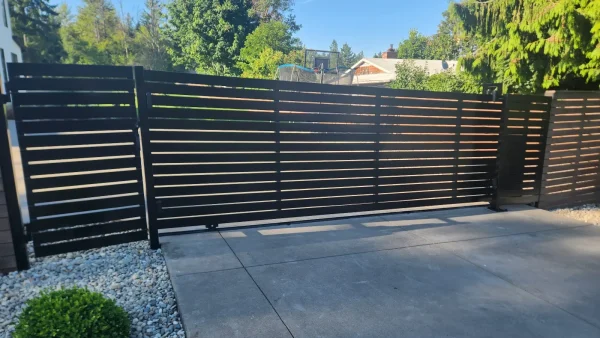
The cost of an automatic sliding gate depends on gate size, material, automation type, and site conditions. Factors such as tracked versus cantilever design, access control features, and electrical requirements all affect pricing.
An on-site evaluation is the most reliable way to determine cost because driveway layout, terrain, and usage frequency directly influence system design.
Automating a sliding gate involves adding a motor, control board, safety devices, and access controls. Costs vary based on gate weight, daily cycle count, and whether the existing gate structure can support automation safely.
In some cases, automation is straightforward. In others, structural adjustments or operator upgrades are required to ensure reliable performance.
Many existing sliding gates can be automated if the gate is structurally sound, properly aligned, and moves smoothly when operated manually. The gate must also be compatible with the required operator size and safety equipment.
A site inspection is needed to confirm whether automation can be added directly or if modifications are necessary before installation.
Common sliding gate issues include track misalignment, roller wear, debris buildup, sensor interference, and operators that are undersized for the gate’s weight or usage.
In Florida, drainage problems and surface movement can also affect tracked systems. Regular maintenance helps prevent these issues from escalating into motor or control failures.
Sliding gates require sufficient horizontal space along the fence line and precise alignment to operate smoothly. Tracked systems can be affected by debris or ground movement if drainage is not addressed.
These disadvantages are minimized when the gate type is selected based on site conditions and installed with proper foundations and automation planning.
Neither option is universally better. Sliding gates are often preferred when driveway space is limited, the ground is sloped, or traffic is frequent. Swing gates work well when there is ample clearance and lower cycle demand.
The best choice depends on layout, usage, and long-term maintenance considerations rather than appearance alone.
A properly installed and maintained sliding gate can last many years. Gate lifespan depends on material quality, operator sizing, usage frequency, and routine service.
Regular inspection, lubrication, and timely repairs significantly extend the life of both the gate structure and automation components.
Reach Out to Us