Automatic Driveway Gate Maintenance Guide for Florida Homeowners
Automatic driveway gate maintenance in Florida involves regular cleaning, lubrication, safety testing, and electrical inspection to protect gate systems from heat, humidity, salt air, and storm-related wear. Most failures are preventable with simple monthly checks and annual professional servicing.
This guide is written for Florida homeowners, HOAs, and property managers who want dependable gate operation, fewer breakdowns, and longer system life.
Why Florida Gates Need More Maintenance Than Most States
Florida conditions accelerate wear in ways many owners underestimate. Heat stresses motors and control boards. Humidity and rain promote corrosion and insect intrusion. Coastal salt air attacks bare metal fast. Storms push gates out of alignment and expose electrical systems to power fluctuations.
Without routine care, these factors turn small issues into motor failures, sensor faults, and safety risks.
The Florida Maintenance Schedule That Actually Works
Monthly Maintenance (10 to 15 minutes)
These checks catch the majority of early problems.
Clean the gate and surrounding area
- Wash with mild soap and water
- Rinse sprinkler residue and salt film
- Dry metal surfaces to reduce corrosion
Clear the gate’s travel path
- Sliding gates: remove leaves, sand, and debris from the track
- Swing gates: clear mulch and vegetation from the swing area
Clean and test safety sensors
- Wipe photo-eye lenses with a soft cloth
- Break the beam with a solid object to confirm the gate stops or reverses
- If response is inconsistent, schedule service for your gate safety sensors
Listen during operation
Grinding, squealing, buzzing, or jerky movement usually means friction, alignment drift, or worn components.
Every 2 to 3 Months (Lubrication and Wear Control)
Florida humidity shortens lubricant life.
Lubricate moving parts lightly
- Hinges and pivot points on swing gates
- Rollers and wheel bearings on sliding gates
- Chains and sprockets if applicable
Use silicone-based spray or white lithium grease. Apply lightly and wipe excess. Avoid petroleum sprays as a long-term solution.
If the gate feels heavier or slower even after lubrication, it may be time for professional automatic gate maintenance.
Every 6 Months (Recommended in Florida)
Check alignment and resistance
- Sliding gates should roll smoothly with consistent spacing
- Swing gates should not sag or drag
Soil movement and settling are common in Florida and force the operator to work harder over time.
Verify auto-reverse and safety behavior
Test all monitored safety devices. Inconsistent safety response is not something to ignore.
Annual Professional Inspection
This step prevents the most expensive failures.
Hardware and structural inspection
- Tighten mounting hardware
- Inspect welds, brackets, and operator pads
- Address rust and touch up coatings
Electrical system inspection
- Check for moisture, corrosion, and insect activity
- Inspect wiring and conduit seals
- Confirm control boards are clean and dry
If issues appear, professional automatic gate repair is safer than trial and error.
Backup power testing
Test batteries at least twice per year and plan replacement for batteries every 2 to 5 years depending on heat exposure and usage.
Common Maintenance Mistakes Florida Homeowners Make
Avoiding these mistakes alone can extend gate life by years.
- Using WD-40 as a long-term lubricant
- Ignoring track drainage on sliding gates
- Power-washing control boxes or operator housings
- Skipping monthly safety sensor testing
- Waiting for failure instead of inspecting
DIY vs Professional Maintenance Responsibilities
| Maintenance Task | DIY | Professional |
|---|---|---|
| Cleaning gate and clearing debris | Yes | Optional |
| Basic lubrication | Yes | Optional |
| Alignment and force testing | No | Yes |
| Electrical inspection | No | Yes |
| Safety compliance verification | No | Yes |
Storm and Hurricane Preparation
Before severe weather:
- Clear debris from tracks and drainage areas
- Disable automatic operation if flooding is expected
- Inspect enclosures and seals after storms before resuming use
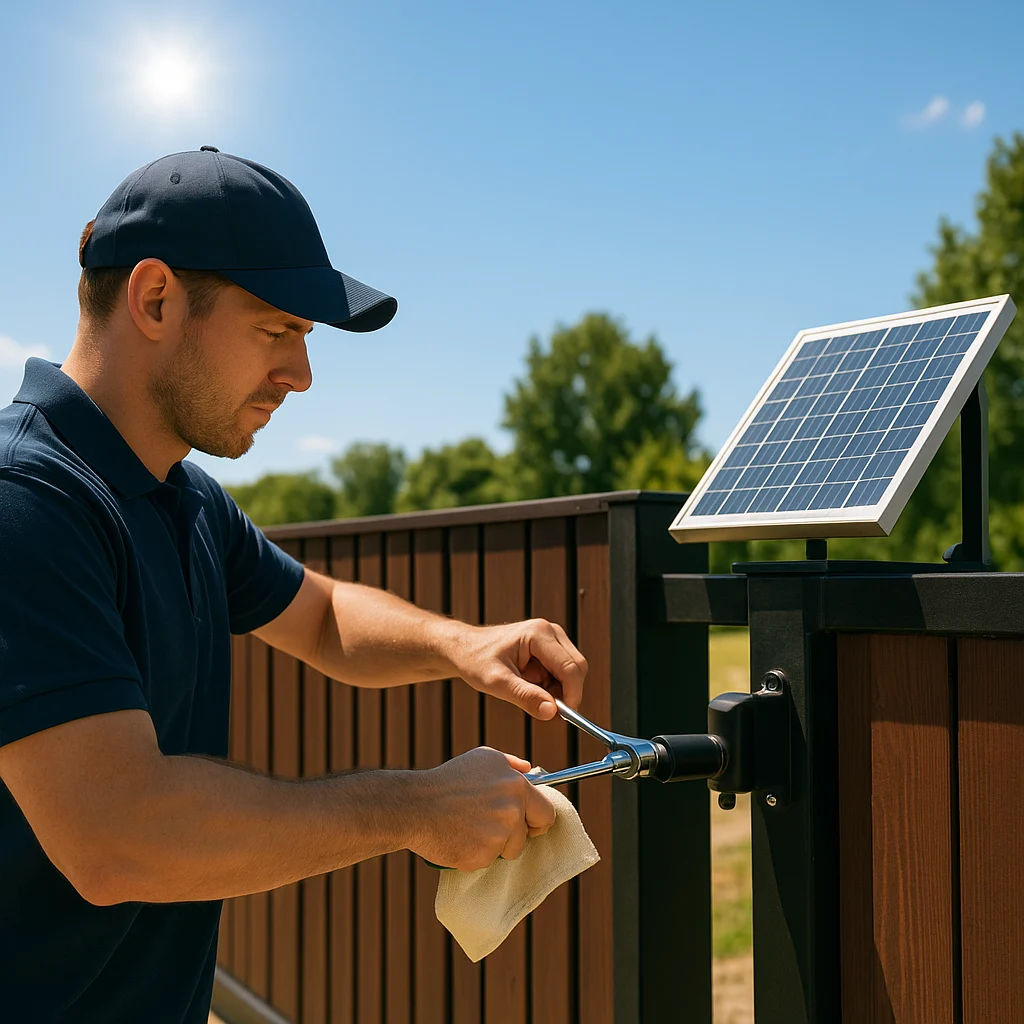
For properties with off-grid systems, solar-powered gate setups should also be inspected regularly.
Frequently Asked Questions
How often should I lubricate an automatic driveway gate in Florida?
Every 2 to 3 months is a safe baseline. Coastal properties may need more frequent lubrication.
What lubricant should I use on driveway gate parts?
Silicone-based spray or white lithium grease works best for outdoor gate components. Apply lightly and wipe excess.
How do I test my gate safety sensors?
Clean the photo eyes and break the beam with a solid object. The gate should stop or reverse immediately.
Why does my sliding gate keep stopping or reversing?
Common causes include debris in the track, sensor misalignment, wiring issues, or increased resistance from worn rollers.
How long do backup batteries last in Florida?
Most last 2 to 5 years. Heat shortens lifespan, so testing twice per year is recommended.
Do automatic driveway gates need professional maintenance?
Yes. Annual service helps verify safety systems, alignment, electrical health, and long-term reliability.